


On 25 April 2026, members of the Asian Medical Students’ Association – Macau Chapter (AMSA-Macau), accompanied by the Macau University of Science and Technology (MUST) Faculty of Medicine Assistant Dean and AMSA-Macau Patron, Associate Professor Daniel Baptista-Hon, visited the Associação de Reabilitação de Toxicodependentes de Macau (ARTM), one of Macau’s leading rehabilitation centres dedicated to supporting individuals affected by substance dependence through recovery and social reintegration.
The visit began with an informative introduction to Macau’s drug-related legislation by Marcus Leong, Vice Director of the ARTM. Mr Leong introduced the legal definitions and consequences of drug offences. This provided important context for understanding the challenges surrounding substance abuse and the essential role ARTM plays within the community. Participants were then introduced to ARTM’s comprehensive rehabilitation approach, which encompasses harm reduction, treatment programmes, after-care services, and prevention initiatives. The centre’s holistic model emphasises not only physical recovery, but also psychological wellbeing, social support, and long-term reintegration.
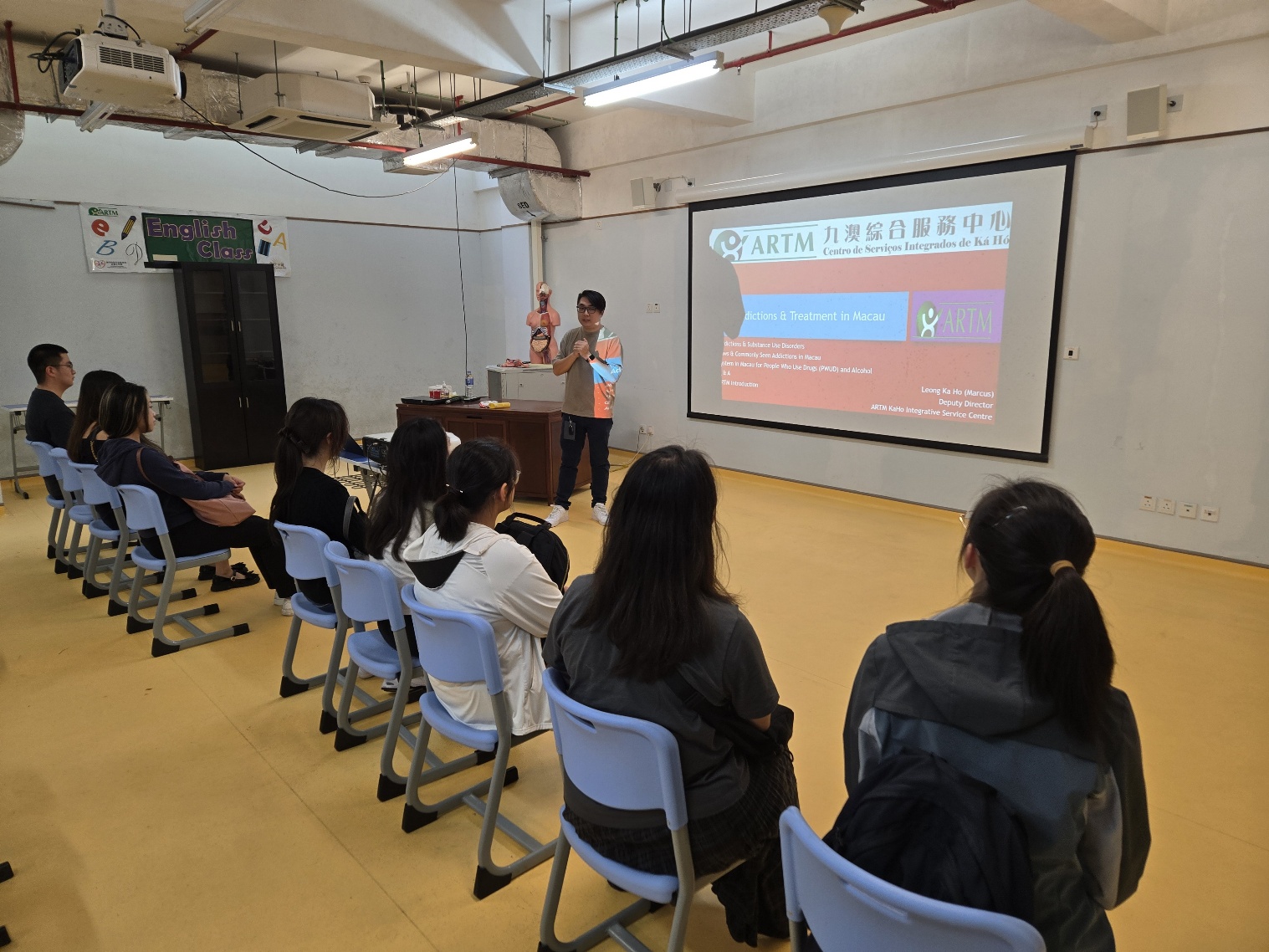
Mr Marcus Leong, Vice Director of the ARTM, introducing the illicit drug legislation and the work of ARTM.
As part of the visit, members toured the rehabilitation facilities and gained insight into the daily lives and routines of residents. Facilities visited included the gymnasium, meeting and counselling rooms, computer laboratory, T-shirt printing workshop, and baking room, where residents are able to develop practical vocational and life skills. A particularly meaningful part of the visit was the centre’s art exhibition, which showcased creative works produced by residents during their rehabilitation journey.
Members also visited the “Hold on to Hope” Café, a vocational training initiative operated with the involvement of current and former rehabilitation residents. The “Hold on to Hope” project demonstrated the importance of providing supportive pathways back into society. Through practical workplace experience and skills training, the initiative helps individuals rebuild confidence, regain independence, and prepare for long-term community reintegration.
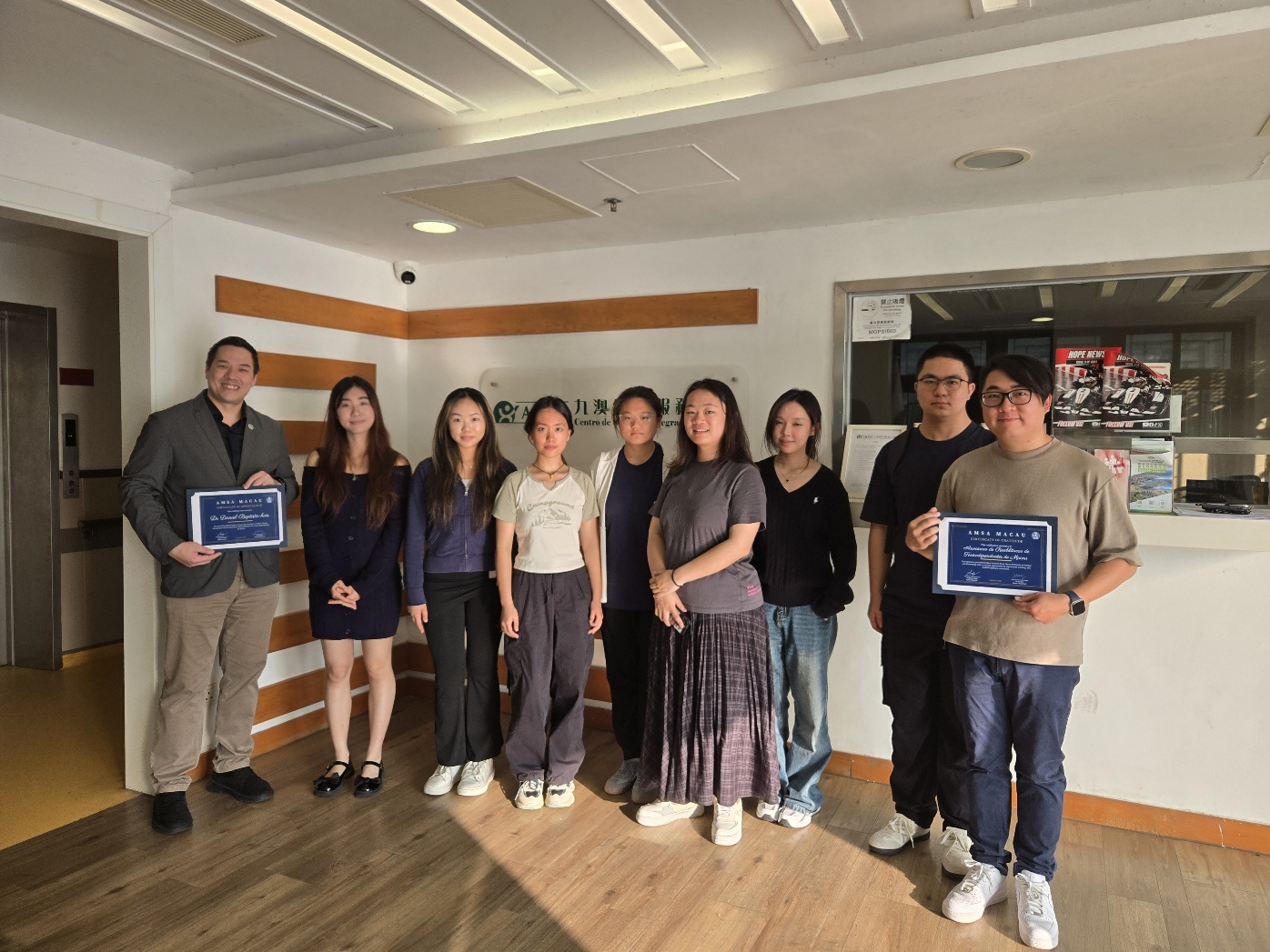
Presentation of certificates of appreciation and group photo.
The visit provided AMSA-Macau members with a deeper appreciation of the complexities of addiction, the value of community-based rehabilitation, and the importance of reducing stigma surrounding substance dependence.

