


From May 26 to 29, 2026, teachers and students majoring in Food and Nutritional Sciences from the Faculty of Medicine, Macau University of Science and Technology, embarked on a four-day study tour in the Guangdong-Hong Kong-Macao Greater Bay Area. Centered on immersive and inquiry-based practical teaching, the tour guided teachers and students to the frontline of modern food processing and manufacturing in the Greater Bay Area, offering in-depth insights into industrial development, technological innovation and application scenarios.
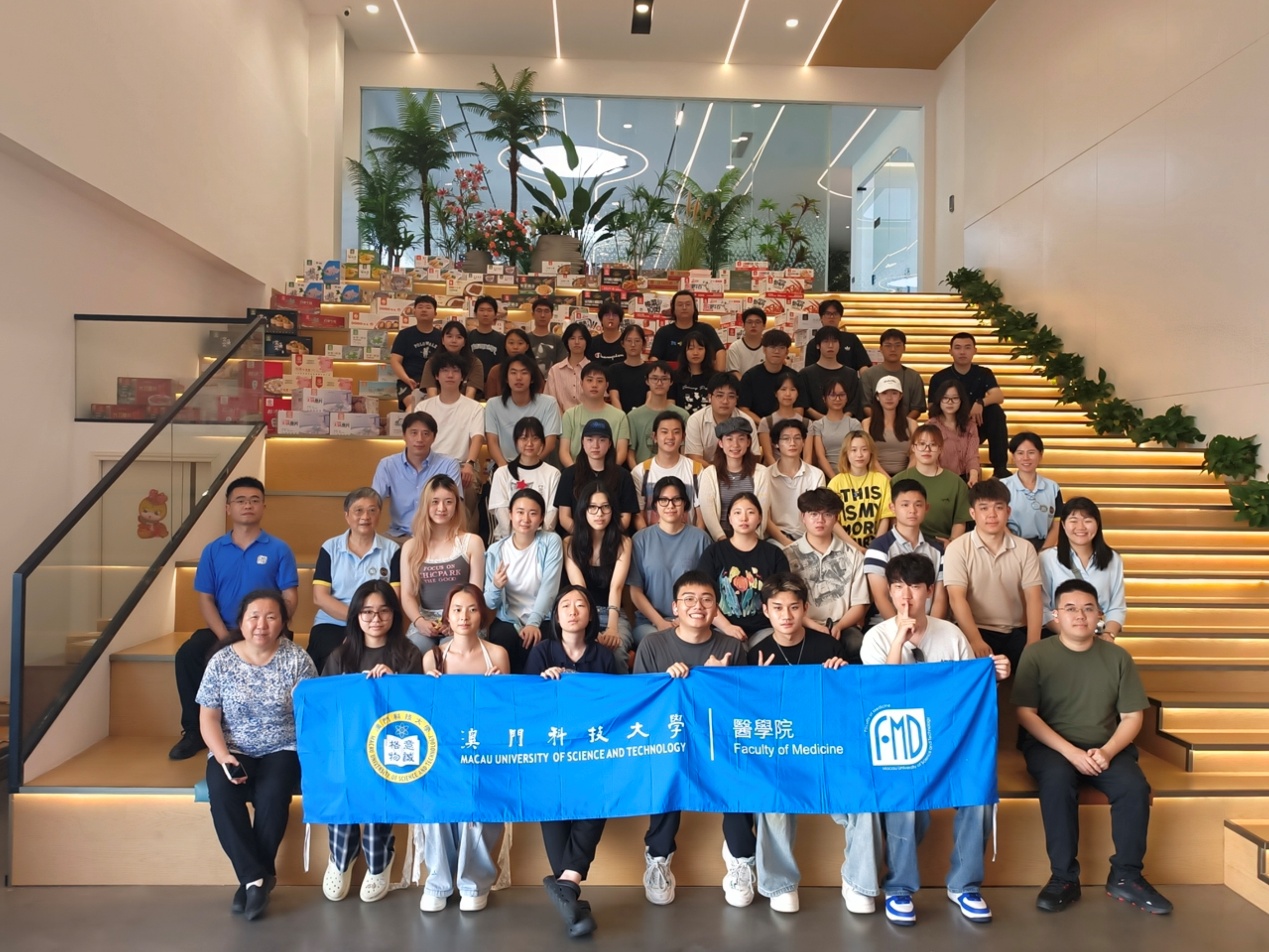
Group photo on the Greater Bay Area study tour
During the tour, the group visited a series of renowned food enterprises and distinctive cultural venues, including Lee Kum Kee (Xinhui) Production Base, Chenpi Culture Museum, Amos Food (Group) Co., Ltd., Bai Xiang Shun (Guangdong) Industrial Development Co., Ltd., Yakult Factory, Ganoderma Lucidum Culture Museum (Mushroom World), Yan Tang Dairy, Kewpie Foods and Huamei Foods. The visits systematically covered the operation of the entire modern food industry chain, from raw material development and intensive processing to product launch.
At the Chenpi Culture Museum and Ganoderma Lucidum Culture Museum, two featured cultural exhibition venues, students gained in-depth understanding of the scientific value and cultural connotation of natural products, as well as the integration of traditional specialty ingredients and modern food engineering technologies. By observing key processes such as efficient extraction, vacuum drying and standardized quality control, students clearly understood how traditional functional raw materials are developed into high value-added products that meet modern market and clinical nutrition needs. The integration of traditional culture and modern technology has effectively broadened students’ professional horizons.
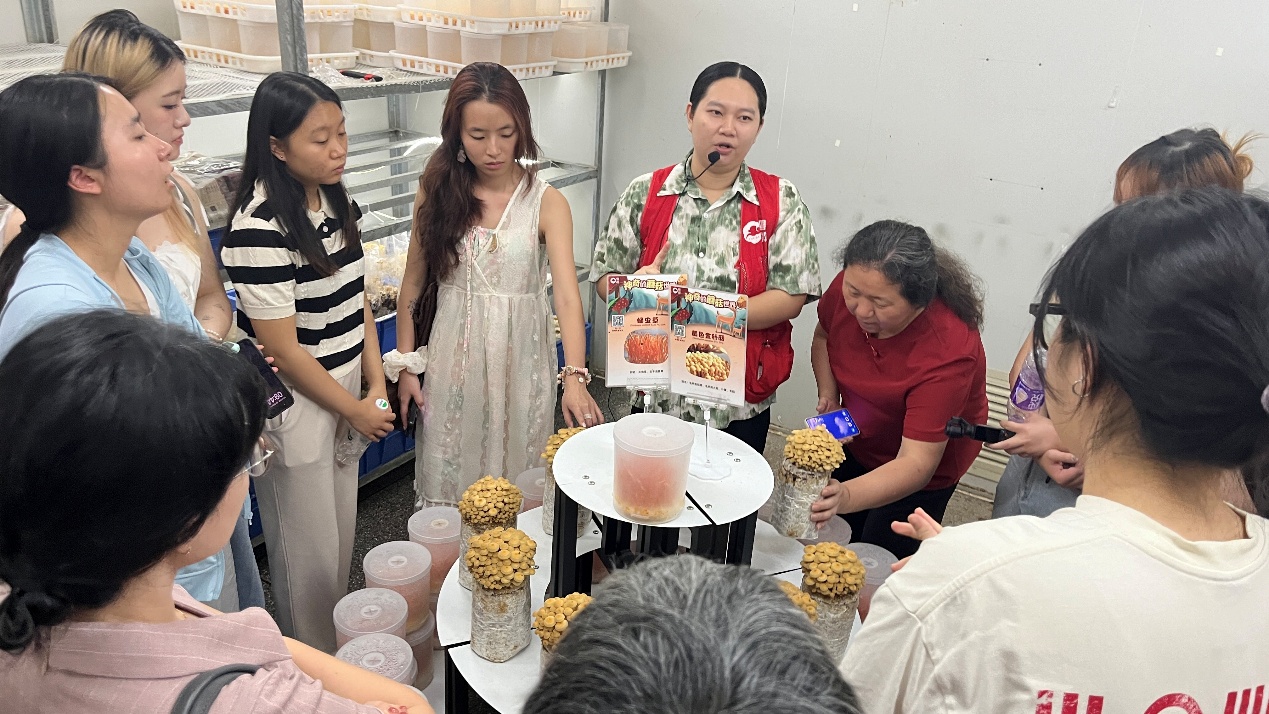
Students listening attentively to the tour guide
At the Yakult and Lee Kum Kee production bases, the teachers and students focused on the strict quality control systems and food safety standards in the food industry. Yakult’s automated production line ensures precise control throughout the process from strain cultivation and fermentation to sterile cold filling. Sophisticated temperature control systems and hygiene protection effectively maintain the activity and quality safety of probiotic products. Lee Kum Kee integrates traditional brewing techniques with modern production lines, where fermentation facilities and automated quality control (QC) systems operate in synergy, helping students understand the mechanisms of flavor stability and food safety management (HACCP system) in industrial production.
At enterprises including Yan Tang Dairy, Kewpie Foods, Huamei Foods, Amos and Bai Xiang Shun, students observed modern food processing procedures at close range through dedicated viewing corridors, including homogenization and sterilization of dairy products, ingredient mixing and emulsification of sauces, processing of baked goods and moulding of confectionery. Automated and intelligent production equipment and efficient logistics sorting systems provided students with a concrete and systematic understanding of “From Farm to Table” food safety management.
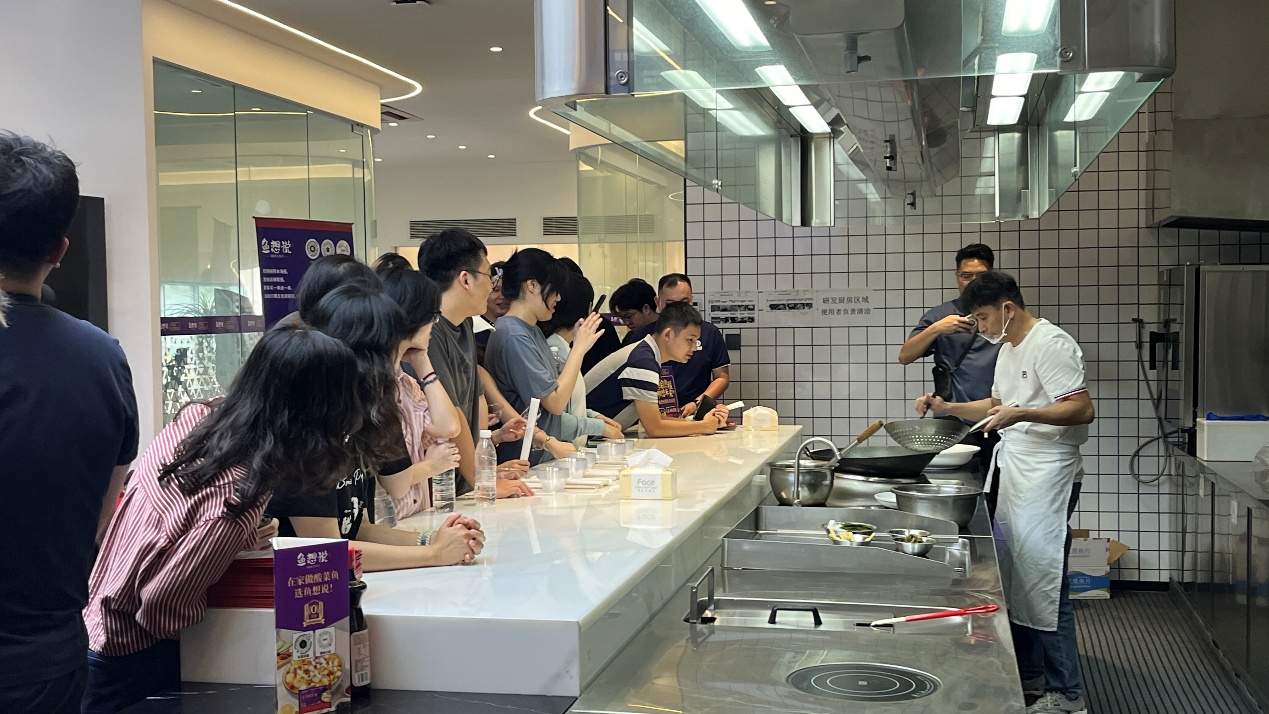
Students waiting to taste the Fish with pickled mustard greens
Zhang He Yujia mentioned that among the many food enterprises visited, the Yakult factory left the deepest impression. The staff gave a detailed introduction to the fully automated production line, from bottle forming and product filling to packaging in a seamless process. With high production efficiency and low manual intervention, she truly experienced the high efficiency and standardized management of the modern food industry.
Ma Lening stated that this study tour deepened her understanding of the development of food and nutritional science. Textbook knowledge was vividly demonstrated in the industrial setting, making her realize that food production must balance quality, safety and sustainability. Meanwhile, the deep integration of traditional food culture such as chenpi with modern industry led her to understand that food is not only a source of nutrition, but also an important reflection of historical heritage and lifestyle.
This study tour in the Greater Bay Area enabled students to step out of the classroom and into the industrial frontline, gaining first-hand exposure to the efficient, intelligent and green production models of modern food enterprises. Through factory visits and technical exchanges, students further recognized the close connection between food research and development, processing technology optimization and public food safety. They have developed a more comprehensive and systematic professional understanding of the big health industry, food manufacturing systems and translational medical applications, laying a solid foundation for their future academic and professional development.

